Understanding Trezor's Quantum-Ready Security Architecture
An in-depth exploration of Trezor's post-quantum cryptography implementation, including SLH-DSA-128 algorithms, TROPIC01 secure element, and how Trezor is preparing for the quantum computing era.
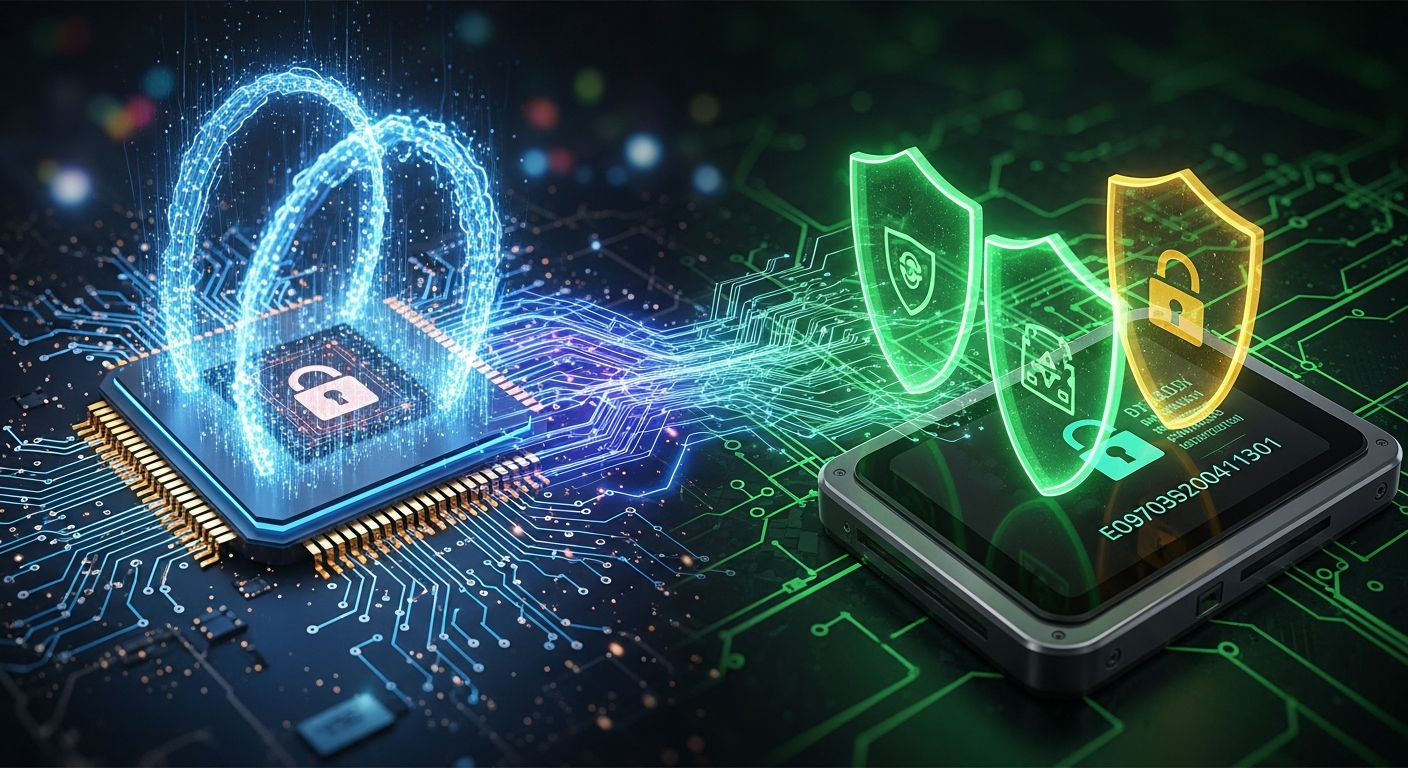
As quantum computing technology advances from laboratory experiments toward practical reality, the cryptocurrency industry faces a looming question: what happens when quantum computers become powerful enough to break the cryptographic algorithms securing Bitcoin and other digital assets? The Trezor Safe 7 is the first consumer hardware wallet to directly address this challenge by implementing post-quantum cryptographic algorithms alongside traditional security measures. This article explores the quantum threat landscape, explains how Trezor’s quantum-ready architecture works, and discusses what this means for the long-term security of your cryptocurrency holdings.
The Quantum Computing Threat to Cryptocurrency
To understand why quantum computing matters for cryptocurrency security, it is essential to first understand how current cryptographic systems work. Bitcoin and virtually all cryptocurrencies rely on elliptic curve cryptography (ECC), specifically the ECDSA (Elliptic Curve Digital Signature Algorithm) and increasingly Schnorr signature schemes. These algorithms derive their security from the mathematical difficulty of the Elliptic Curve Discrete Logarithm Problem (ECDLP), which is practically impossible for classical computers to solve within any reasonable timeframe.
Quantum computers, however, operate on fundamentally different principles. Using Shor’s Algorithm, a sufficiently powerful quantum computer could theoretically solve the ECDLP efficiently, meaning it could derive a private key from a known public key. If this were possible, an attacker could steal cryptocurrency from any address whose public key has been revealed on the blockchain. This is not an immediate threat today because current quantum computers have nowhere near enough stable qubits to execute Shor’s Algorithm against production cryptographic keys. However, the pace of quantum computing development is accelerating, and responsible security planning must account for future capabilities.
What Makes Trezor “Quantum-Ready”
The Trezor Safe 7’s quantum-ready designation refers to its implementation of SLH-DSA-128 (Stateless Hash-Based Digital Signature Algorithm at 128-bit security level), one of the post-quantum cryptographic algorithms standardized by the National Institute of Standards and Technology (NIST) as part of their Post-Quantum Cryptography Standardization project. Unlike ECDSA and Schnorr signatures, SLH-DSA derives its security from the well-studied hardness of hash function properties rather than discrete logarithm problems that quantum computers can potentially solve.
The “stateless” aspect of SLH-DSA-128 is particularly important for hardware wallet implementations. Some earlier post-quantum signature schemes required the signer to maintain and update internal state information with each signature, creating risks of catastrophic key reuse if the state was lost or corrupted. SLH-DSA-128 eliminates this requirement entirely, making it ideally suited for the resource-constrained environment of a hardware wallet where simplicity and reliability are paramount.
How SLH-DSA-128 Works
SLH-DSA-128 is built on a family of hash-based signature schemes that have been studied by cryptographers for decades. At a high level, the algorithm constructs a virtual tree structure where the root serves as the public key and individual signatures are generated using specific paths through the tree. The security of the scheme depends solely on the collision resistance and preimage resistance of the underlying hash function, properties that are believed to be quantum-resistant.
The “128” in SLH-DSA-128 refers to the classical security level in bits, which translates to approximately 64 bits of security against quantum attacks due to Grover’s algorithm’s quadratic speedup for search problems. While this may sound like a significant reduction, 64 bits of quantum security is considered more than sufficient for the foreseeable future. The scheme uses SHAKE-256 as its underlying hash function, which is part of the SHA-3 family and is well-established as a secure cryptographic primitive.
In practice, when you sign a transaction on the Trezor Safe 7, the device can generate both a traditional ECDSA/Schnorr signature (for current blockchain compatibility) and an SLH-DSA-128 signature (for quantum-resistant verification). This hybrid approach ensures backward compatibility with existing blockchain infrastructure while providing a quantum-safe signature that can be verified independently.
The TROPIC01 Secure Element’s Role
The quantum-ready cryptographic operations on the Trezor Safe 7 are executed within the TROPIC01 secure element, the custom-designed open-source chip created by Tropic Square. The TROPIC01 was designed from the ground up to handle the computational demands of post-quantum algorithms, which typically require more processing power and memory than traditional ECC operations. This purpose-built hardware acceleration ensures that quantum-safe signatures are generated quickly and efficiently without draining the device’s battery or introducing noticeable delays during transaction signing.
The open-source nature of the TROPIC01 is particularly significant in the context of post-quantum cryptography. Quantum-resistant algorithms are relatively new additions to the cryptographic toolkit, and the security community is still actively analyzing their implementations for potential side-channel vulnerabilities. By making the TROPIC01’s design and firmware fully auditable, Trezor enables the global research community to examine and verify the correctness of the post-quantum implementation, providing a level of assurance that is impossible with proprietary secure elements.
Timeline: When Will Quantum Computers Threaten Crypto?
Experts in quantum computing offer a wide range of estimates for when a cryptographically relevant quantum computer (CRQC) might become available. Conservative estimates place this milestone at 15 to 30 years away, while more optimistic (or alarmist) projections suggest it could happen within 10 to 15 years. The key metric is the number of stable, error-corrected logical qubits required to run Shor’s Algorithm against 256-bit elliptic curve keys, which is estimated at approximately 2,500 to 4,000 logical qubits. Current state-of-the-art quantum computers operate with at most a few thousand physical qubits, many orders of magnitude short of the millions of physical qubits needed to create thousands of stable logical qubits.
However, several factors make proactive preparation prudent. First, the “harvest now, decrypt later” strategy means that encrypted data intercepted today could be stored and decrypted once quantum computers become available. While this primarily threatens encryption rather than digital signatures, it establishes a precedent for forward-looking security measures. Second, quantum computing development could experience unexpected breakthroughs that dramatically accelerate timelines. Third, migrating an entire cryptocurrency ecosystem to quantum-safe cryptography will take years of protocol development, testing, and deployment, meaning the transition needs to begin well before the threat materializes.
Bitcoin and the Quantum Transition
Bitcoin’s approach to quantum resistance is still evolving at the protocol level. The Bitcoin development community is actively researching and discussing various post-quantum signature schemes for potential inclusion in future soft forks. Proposals include implementing hash-based signatures similar to SLH-DSA, lattice-based schemes like CRYSTALS-Dilithium, and hybrid approaches that combine traditional and quantum-safe signatures.
In the meantime, Trezor’s device-level quantum readiness provides a practical layer of protection. Even before Bitcoin’s protocol adopts quantum-safe signatures, Trezor Safe 7 users benefit from quantum-safe key generation and storage within the hardware wallet itself. When Bitcoin eventually implements protocol-level quantum resistance, Trezor Safe 7 will be positioned to support these new standards through firmware updates, providing a seamless transition for users who prepared early.
What This Means for Your Security Today
For everyday cryptocurrency users, the practical impact of quantum-ready security is primarily about future-proofing. If you are holding Bitcoin or other cryptocurrencies for the long term (5, 10, or 20+ years), the Trezor Safe 7’s quantum-ready architecture provides insurance against a threat that, while not immediate, is increasingly acknowledged by the cryptographic community as inevitable. By choosing a quantum-ready hardware wallet today, you avoid the need to migrate to new security infrastructure later, potentially under time pressure as quantum computing capabilities advance.
For shorter-term holders and active traders, quantum readiness is a bonus rather than a primary purchasing factor. The Safe 7’s quantum features add no overhead or inconvenience to daily usage and come bundled with many other premium features that justify the device’s price point. Regardless of your time horizon, choosing a wallet that has already implemented quantum-safe algorithms puts you ahead of the curve and demonstrates the kind of forward-thinking security mindset that protects cryptocurrency holdings over time.
Conclusion: Preparing for the Post-Quantum Era
The transition to quantum-safe cryptography is not a question of if, but when. Trezor’s Safe 7 stands alone among consumer hardware wallets in offering production-ready post-quantum cryptographic protection today. Combined with its open-source firmware, dual secure element architecture, and the broader Trezor security ecosystem including Shamir Backup and passphrase protection, the Safe 7 provides the most comprehensive and future-proof security package available for individual cryptocurrency holders. Whether quantum computers threaten current cryptography in 10 years or 30, Trezor Safe 7 users can rest assured that their assets are protected by cryptographic algorithms designed to withstand the full power of quantum computation.
Comments
No comments yet. Be the first to share your thoughts!